The Unexpected IRONMAN: A Race Story. Written by Raquel Torres
The Decision to Do a Full Ironman
I write this with the intention of sharing my story—my passion, effort, obstacles, highs and lows—with the hope of inspiring others to fight for their dreams, to grow in what they love, and to become better human beings in every area of life. You can read the original version published @ Athletic Mentors Team Web.
It is challenging to explain an entire life in words. I have a million and one excuses that anyone could use to abandon their dreams, which is precisely what makes my story meaningful. If God and the universe allow it, one day I will write an autobiography of my crazy life—perhaps when I have a bit less physical energy and a bit more clarity.
This story begins with the decision to do a Full Ironman.
The Path to the Decision
My coach, Mark Olson, had been telling me for years that I should consider racing a Full Ironman. Given the complexity of my life—multiple moves, job changes, parental responsibilities, sponsor commitments, and opportunities in other sports—my goals have often been shaped by what life presents along the way rather than long-term planning.
One constant source of belief and support has been R.H. Mejía & Corp., who trusted me both morally and materially. They gave me a time-trial bike—the bike of my dreams as a child. To me, it felt like being entrusted with a precious sword, something to honor and protect.
After several very challenging years competing as an elite and professional athlete, in 2018 I decided to step back and race at the age-group level, focusing on local events. That summer, I was honored to be invited by the Dominican Triathlon Federation to compete in a World Cup in Huatulco, Mexico, and a Pan American Cup in Quebec, Canada.
As they say, conditions are never perfect. Still, I felt I was finally ready to attempt a Full Ironman. Together with my coach, we decided to commit to one, racing as part of the Athletic Mentors team.
A Sudden Change of Plans
Shortly after committing, I received coaching opportunities that required relocation. Eight weeks before the race, my daughter Chantal, our dog Phoenix, and I moved to Virginia. Naturally, we looked for an Ironman close to our new home and found Ironman Maryland, just eight weeks away.
I signed up, made plans with friends who were also racing, and embraced the challenge.
Two days before the race, however, I received a call from Ironman staff informing me that, due to my status as an Elite ITU competitor, I was not allowed to race as an age-group athlete in Maryland—and the event did not offer a professional category.
After several emails and phone calls between my coach and race officials, I was transferred to Ironman Louisville, taking place just two weeks later, where a pro category existed.
Honestly, this shook me.
I had decided not to race professionally anymore, feeling that I did not currently have the support or conditioning to be competitive at that level. I felt unsettled and briefly lost my focus. But I chose to concentrate on what I could control: logistics, family responsibilities, work commitments, and showing up to the start line prepared.
Preparation Under Pressure
Everything changed. Instead of driving to Maryland, I now needed flights, bike transport, and a complete reorganization of home responsibilities—while still training.
When I pack for races, I create a checklist one to two weeks in advance, laying everything out in one corner of my room:
Swimming gear: wetsuit, cap, goggles, race suit, Vaseline
Running gear: shoes, socks, visor, glasses, thermos
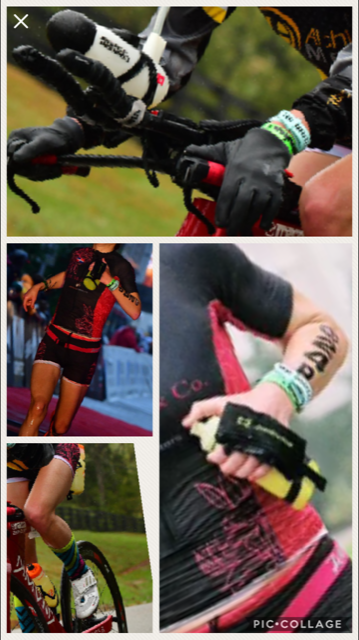
Biking gear: helmet, glasses, bottles, power meter charger, tools, tape
Nutrition plan
After years of racing ITU and 70.3 events—and many failed nutrition experiments that ended in vomiting and stomach issues—I finally learned what works for my body. Fluids work best for me: easier to digest, easier to consume, and more reliable. With only two weeks to adjust, I researched, tested, and trained extensively with my nutrition plan so I could execute it smoothly on race day.
Bike nutrition:
4 bottles (3 carbohydrate fluids, 1 gel + water)
Salt tablets in my bento box
Run nutrition:
1 bottle with carbohydrates
Salt tablets (used minimally)
Occasional sips of Coca-Cola
I avoided water, as it tends to upset my stomach.
My bike was shipped a week ahead via TriBike Transport, a service offered to professional athletes, and I trained on my road bike in the meantime.
Race Week
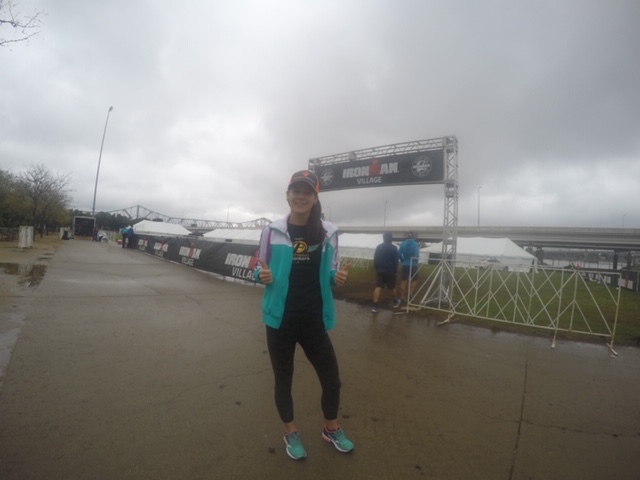
Upon arriving in Louisville, the weather turned dramatically: wind, rain, and cold temperatures. None of us were prepared.
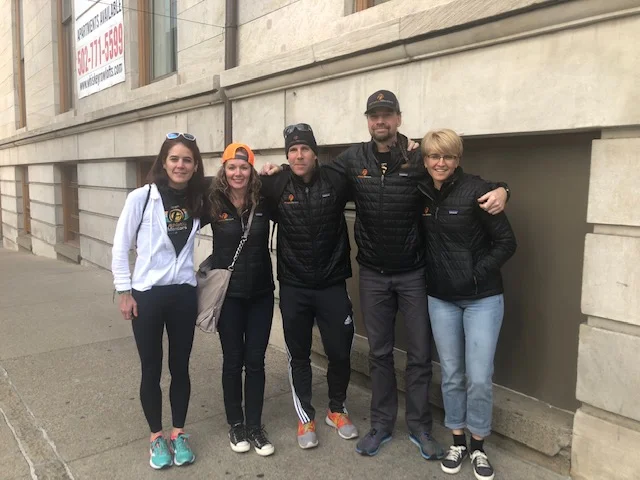
I focused on finding what I needed to survive race day. At Ironman Village, everything was sold out except a small winter hat. I rode my bike six miles to a recommended store—figuring the 12-mile round trip would help my metabolism—and thankfully found what I needed. My coach and teammates from Athletic Mentors also lent me cold-weather gear.
That night, I had a beer, a salmon sandwich, prepared my nutrition, ate a light pasta dinner, drank tea, and went to sleep.
Race Day
5:00 AM
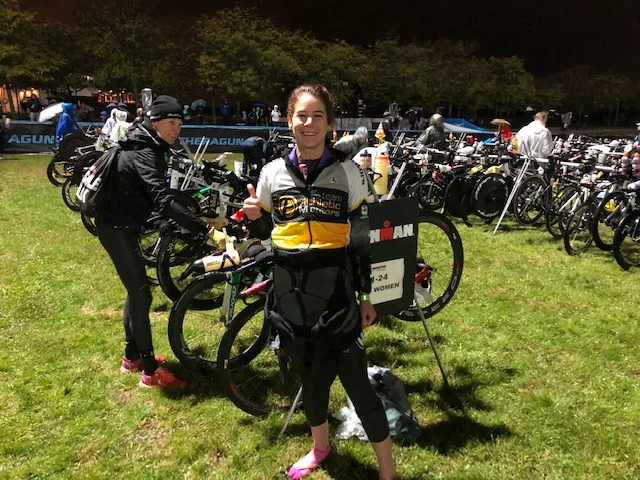
I pinned my numbers, drank coffee, and ate a bagel with peanut butter. It was raining hard. I put on my wetsuit early to stay warm and walked to transition in the dark, cold rain.
6:00 AM
Transition setup was uncomfortable. The walk from T1 to the swim start was nearly 2 km, surrounded by thousands of athletes saying, “We signed up for this—let’s do our best.”
7:30 AM
The swim start was delayed due to strong currents. The course was shortened by 0.9 miles and the start was pushed back 30 minutes.
Swim – 3.86 km
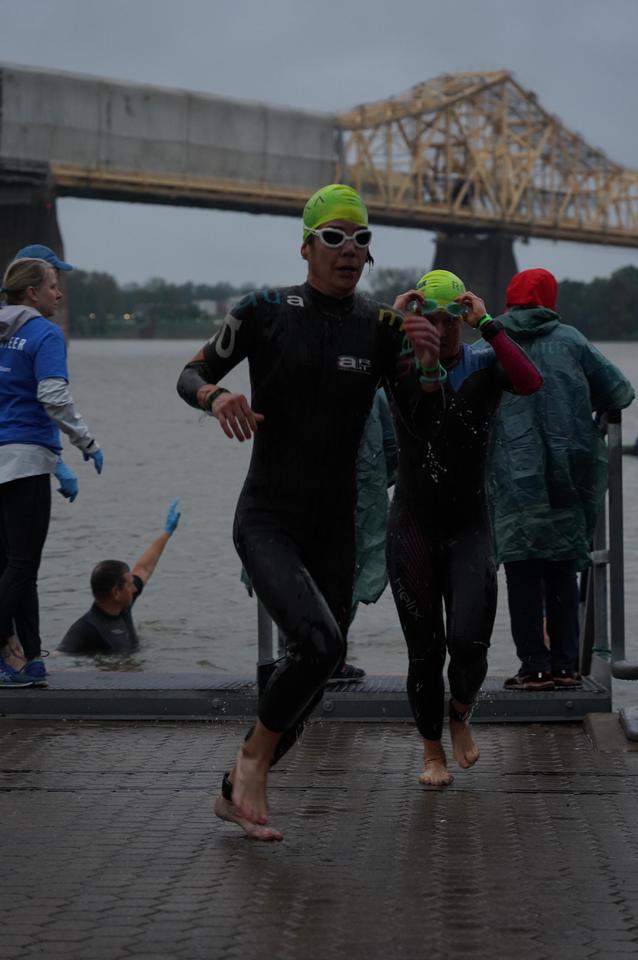
It was dark, cold, and raining. I stayed calm. My goal was to treat the swim as a warm-up—this was my first Ironman, and I wanted to conserve energy and protect my mental state.
The currents were strong, visibility was poor, and the water smelled awful due to the rain. I followed others when possible and focused on staying relaxed. I couldn’t wait to get out of the water.
T1 – Swim to Bike
I used the wetsuit strippers—something I hadn’t planned. They struggled a bit (laughing about it now), but the volunteers were kind and supportive.
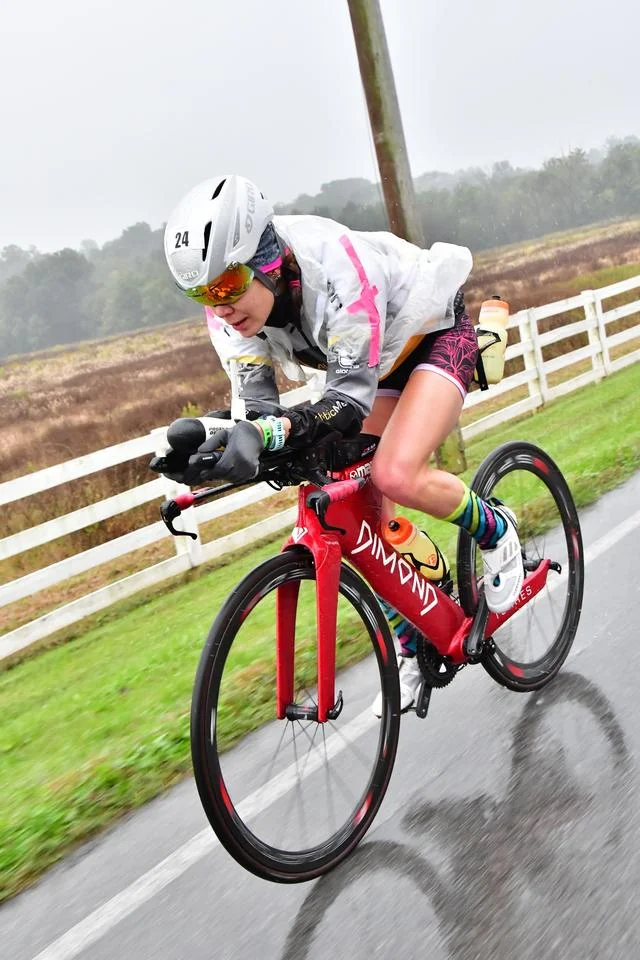
I wore gloves, a winter hat, two cycling neck warmers, a thermal jersey, and a rain jacket. My cycling shoes were already clipped in, so I ran barefoot to the mount line, put on my socks, and got on the bike.
Bike – 180.25 km
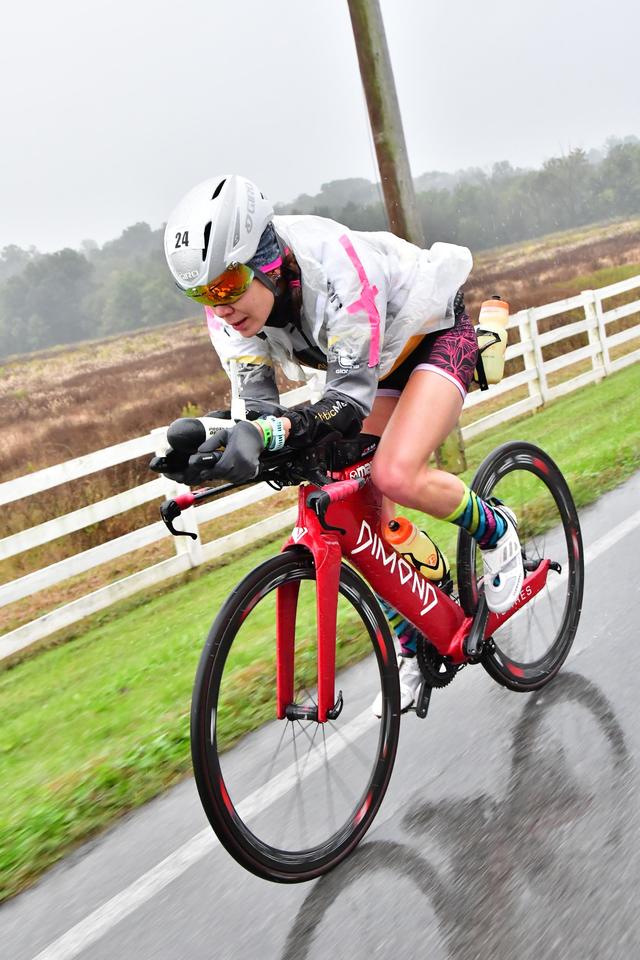
This was the most challenging part of the race.
My power meter wasn’t calibrated, and with frozen fingers and gloves, the touchscreen was impossible to use. After 10 km of frustration, I let it go and told myself, “Raquel, just ride.”
The first 40 km were brutally cold. Eventually, I warmed up, removed my rain jacket, and handed it to a volunteer.
I saw four deer cross the road in front of me—a beautiful moment. Without power or speed data, I focused on time and distance, drinking nutrition every ten minutes. Any negative thought earned me another sip.
About 100 km in, my chain came off—three times. The last time it was badly stuck, but I managed to fix it. I stayed positive: “This is what it takes. Keep going.”
The final 20 km were mentally brutal. My neck and back hurt from staying aero. I counted seconds and stayed present.
T2 – Bike to Marathon
I looked at a volunteer and said, “Now… a marathon?” She smiled.
I sat down, changed slowly, stretched, fueled, and took my time. Clarity and patience mattered more than speed.
Marathon – 42.2 km
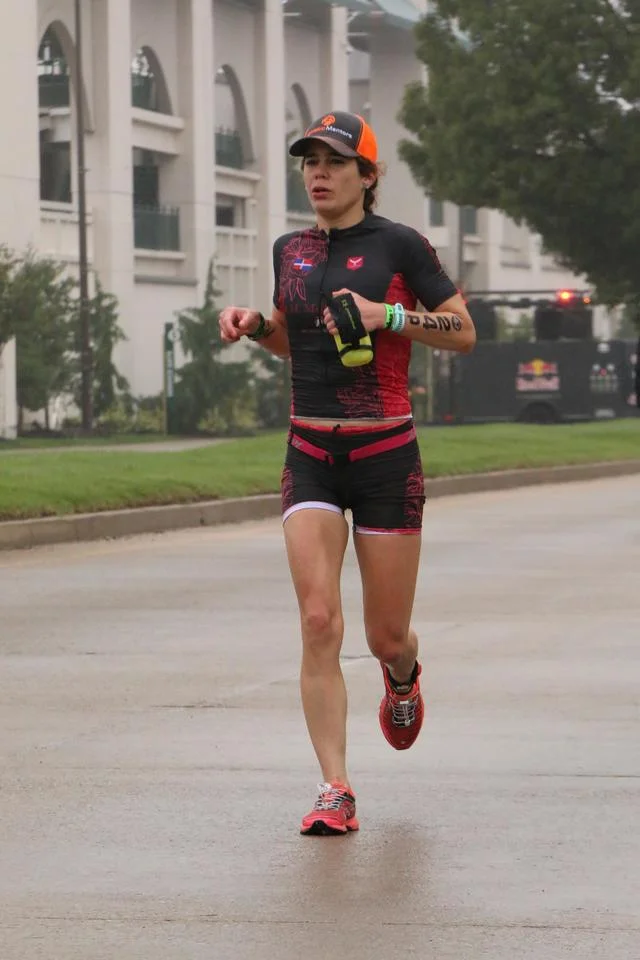
Surprisingly, I felt strong. My body seemed to forget I had already been racing for seven hours. The first 10 km were about restraint. My mantra became: “Stay in the zone.”
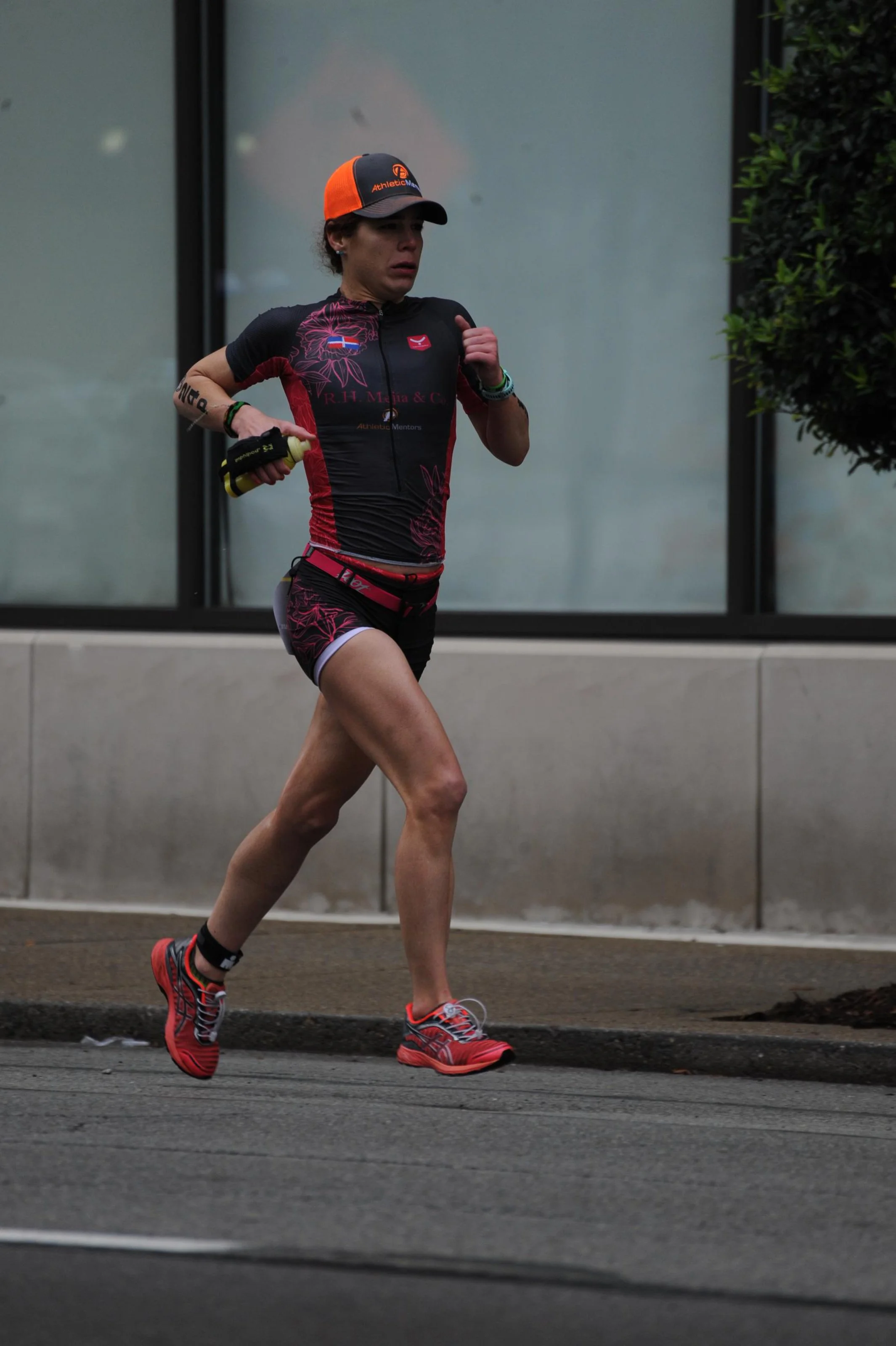
At 20 km, the pain arrived, and my pace slowed. I shifted my focus to form, breathing, and mental discipline.
I absorbed everything—the music, the people, the smells of laundry and homes. I joked to myself, “I wish I were drinking coffee and doing laundry right now.”
There was a cyclist playing music, a harmonica player, and someone shouting, “If it were easy, everyone would do it!”
At 21 km, my coach, Mark, yelled, “Now you need to be tough!”
I thought, “Now?”
The final 10 km were hard. I broke them down: “Just 10 km… just a 5k… keep going.”
The Finish
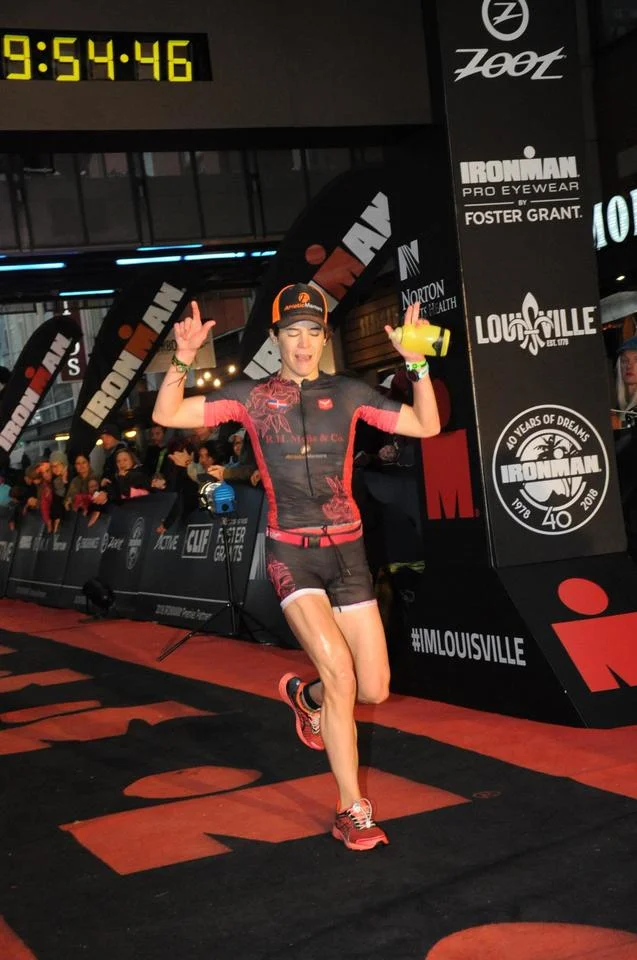
The finish line was an explosion of emotion—joy, exhaustion, disbelief. I laughed, cried, laughed again… and crossed the line.
Click here to read the Original version of this blog published by the Athletic Mentors Team.