Take the Reins: How Your Locus of Control Shapes Your Life
What is Locus of Control? Why It Matters and How to Strengthen It.

In psychology, locus of control refers to the degree to which people believe they have control over the outcomes in their lives. Introduced by psychologist Julian Rotter in 1954, the concept remains central in understanding motivation, behavior change, and resilience. Our locus of control influences how we interpret success, failure, and stress, and how we assign personal responsibility, ultimately shaping how we navigate challenges.
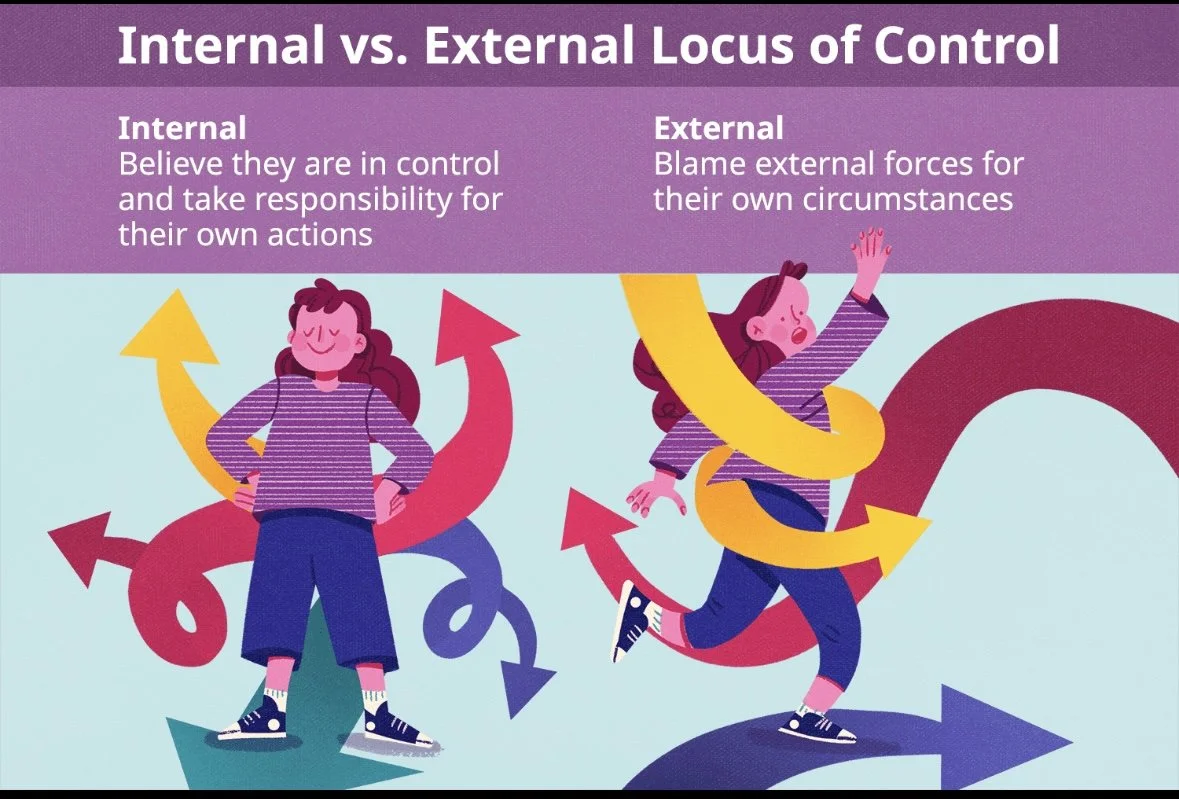
Although locus of control exists on a spectrum, it is usually described in two categories: internal and external.
Internal Locus of Control: “I influence what happens.”
People with an internal locus of control believe that their actions, choices, and efforts largely determine what happens to them. They tend to view life events as outcomes of personal behavior rather than external circumstances. For example, if they perform poorly on a test, they are more likely to think, “I should have prepared better,” rather than blaming the test or the teacher.
Characteristics of strong internal control include:
Higher motivation and persistence
Stronger sense of personal responsibility
Greater problem-solving and proactive behavior
Better academic and work performance
More resilience during setbacks
Internal locus of control is often linked with improved mental health because people feel empowered to change their circumstances.
External Locus of Control: “Things happen to me.”
Those with an external locus of control believe that outcomes are shaped primarily by factors beyond their control, such as luck, fate, or the influence of others. This perspective can sometimes lower stress when situations are genuinely beyond one’s control, but when dominant, it tends to reduce effort and self-efficacy.
People with strong external control may:
Feel powerless under challenging situations.
Attribute success to luck rather than ability.
Avoid responsibility for failures.
Experience higher stress or anxiety.
Struggle with long-term motivation.
While external control is not inherently harmful, acknowledging real external barriers is healthy; an extreme external orientation can limit personal growth.
Which Locus Is Better?

A balanced view is ideal. Most people shift between internal and external control depending on context. However, research consistently shows that a stronger internal locus of control generally predicts higher well-being, achievement, and life satisfaction. Strengthening internal control doesn’t mean ignoring real challenges; it means recognizing your influence where it truly exists.
How to Build a Stronger Internal Locus of Control
Developing internal control is a psychological skill that can be nurtured with practice. Here are practical, evidence-informed strategies:
1. Practice Responsibility Framing
When something happens (good or bad) ask:
“What part of this was within my influence?”
Even small areas of control (such as how you prepare, react, or communicate) reinforce internal thinking.
2. Set Small, Achievable Goals
Internal control grows when you experience the link between effort and outcome. Break tasks into small steps, celebrate progress, and notice how your actions produce results.
3. Replace Passive Language with Active Language
Shift from “I can’t” or “There’s nothing I can do” to “Here’s what I can do next.”
The language you use shapes your perception of control.
4. Build Problem-Solving Skills
Practice identifying problems, brainstorming solutions, and taking action. Effective problem-solving boosts confidence in your ability to influence events.
5. Strengthen Self-Efficacy
Self-efficacy: the belief in your ability to succeed. Supports an internal locus of control. Build it by learning new skills, seeking feedback, and tracking your growth over time.
6. Reflect on Outcomes
After key events, reflect on how your choices contributed. This reinforces the idea that your behavior matters.
Conclusion
Locus of control is more than a psychological concept. It's a powerful lens through which people view the world and their place within it.
While external factors undeniably influence our lives, cultivating a stronger internal locus of control empowers us to take ownership of our decisions, build resilience, and pursue goals with greater confidence.
By intentionally shifting our mindset and behavior, we can enhance our sense of agency and create meaningful change in our lives.
“You have power over your mind—not outside events. Realize this, and you will find strength.”
