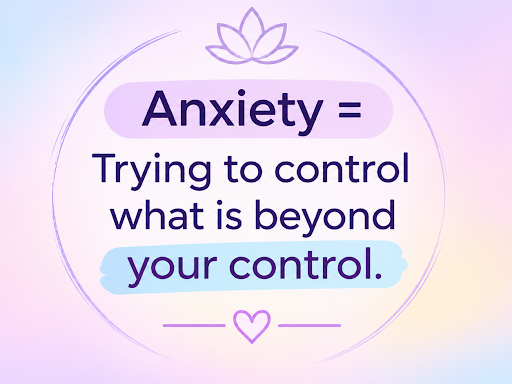
Anxiety is a natural protective response involving the brain, nervous system, and body’s threat-detection mechanisms. When persistent or overwhelming, it can affect our thoughts, emotions, behavior, and physical health. As Spanish psychologist Encarnación López explains, anxiety is multifactorial: genetics, personality, past experiences, stress, environment, biology, and lifestyle can all contribute
Work pressure, financial uncertainty, difficult relationships, poor sleep, and fear of the future are examples of factors that can activate this response.
Understanding the causes is valuable, but knowing why we experience anxiety does not automatically make it disappear. We can spend years analyzing its origins while remaining trapped in the same cycle.
Metacognition: Learning to Observe Our Thoughts
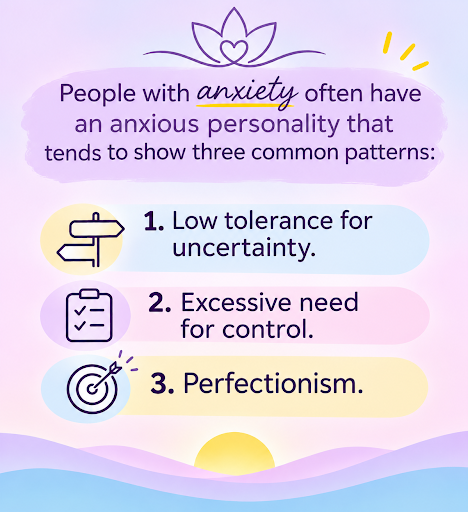
According to psychologist Encarnación López, metacognition is the ability to observe, understand, and question our own thoughts rather than automatically believing them. It helps us recognize negative thinking patterns, distinguish facts from fears, and choose healthier emotional responses. By learning to think about our thinking, we can better manage anxiety and develop emotional awareness.
Changing thought patterns takes practice. López uses the metaphor of walking through snow: repeatedly following the same path creates deeper footsteps. When we consciously choose a different path, we begin creating a new trail. With repetition, the new trail becomes easier to follow, while the old, unused trail gradually disappears. This illustrates how we can develop healthier thinking patterns.
How to apply it: When a negative thought appears, pause, identify it, question whether it is a fact or an assumption, and consciously replace it with a more realistic and constructive thought.
The Role of Our Locus of Control
Psychologist Encarnación López highlights the importance of understanding our locus of control. An external locus leads us to attribute what happens in our lives to factors beyond our control, while an internal locus helps us recognize our influence over our own thoughts, decisions, and actions.
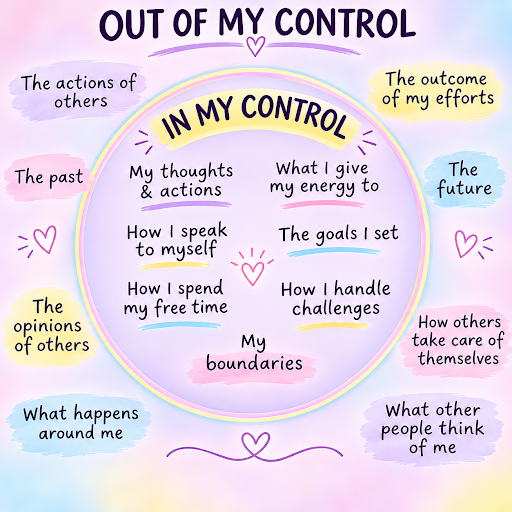
We can strengthen our internal locus of control by taking responsibility for our decisions, challenging unhelpful thoughts, setting realistic goals, and taking small steps every day. This means accepting that we cannot control every circumstance or outcome, but we can choose how we respond and where we direct our energy.
Focus on What We Can Control
An important change involves accepting that life is full of uncertainty and that we cannot guarantee an existence free of challenges or control every outcome. Instead, we can become the protagonists of our own responses: develop an internal locus of control, recognize what is within our influence, and direct our energy toward actions that are meaningful and aligned with our values.
This connects beautifully with Stoicism. Acceptance is not resignation, and letting go is not weakness. It is recognizing the limits of our control. We can influence our decisions, boundaries, habits, attention, and reactions, but not other people’s behavior, the past, or every future outcome.
Control over our actions creates agency. Acceptance of what we cannot control creates peace.
The goal is not to control life forever, but to learn to live it without constantly fighting it.
Three Stoic Reminders
Epictetus: “Some things are up to us and some are not.”
Marcus Aurelius: “You have power over your mind—not outside events.”
Seneca: “We suffer more often in imagination than in reality.”
These are commonly translated versions of their philosophical teachings.
References
Encarnación López, Adiós a la ansiedad, Editorial Zenith, 2025.
La Vanguardia (2025), interview with Encarnación López on anxiety.
20minutos (2025), interview with Encarnación López on anxiety, fear, and control.
